

Summary:
Cataract surgery has advanced significantly with robotic and laser-assisted techniques offering higher precision and safety. Understanding what is cataract surgery, how cataract surgery is performed, and how robotic methods differ from traditional approaches helps patients make the right decision for long-term eye health and better vision.
|
Key Takeaways:
|
Introduction:
Cataract is a common eye condition where the natural lens becomes cloudy, leading to blurred vision and difficulty with everyday tasks. While conventional procedures have been effective for decades, modern robotic cataract surgery combines imaging and laser technology for better control and faster healing. Comparing both techniques can help you choose a treatment that aligns with your medical needs and lifestyle.
What Is Cataract Surgery?
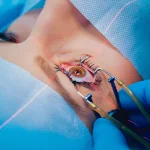
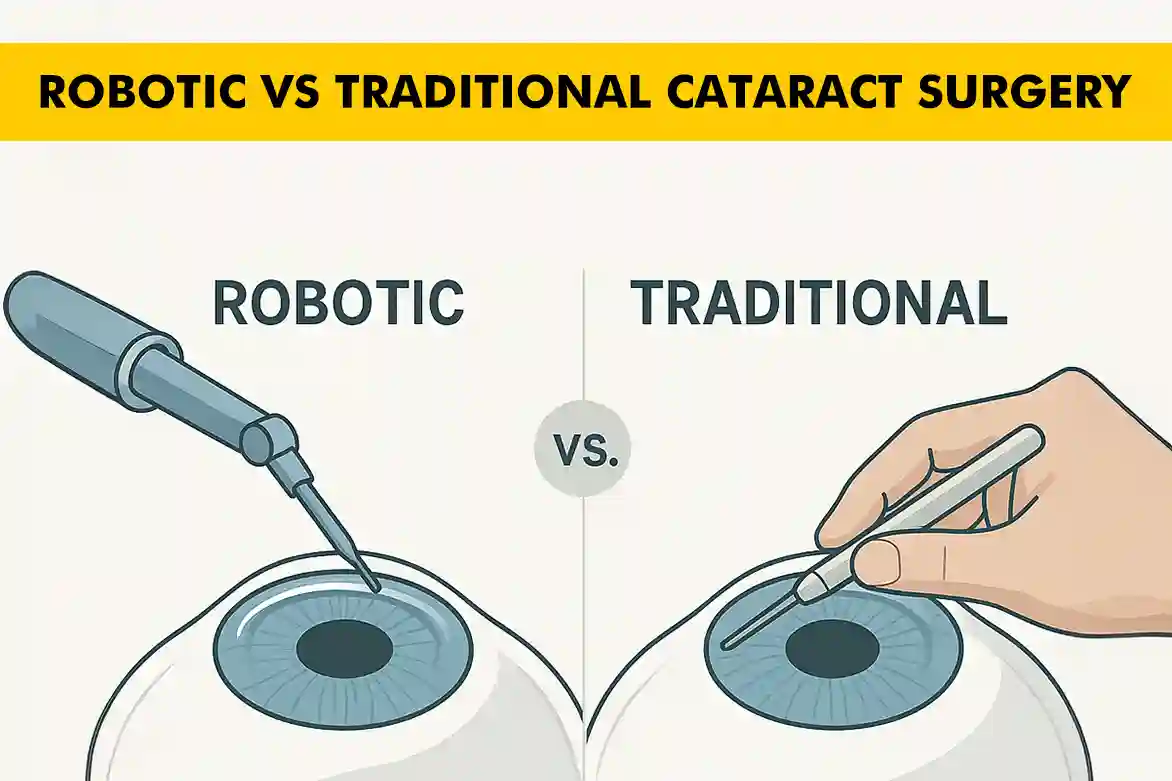
Cataract surgery involves removing the eye’s cloudy lens and replacing it with a clear, artificial intraocular lens (IOL). The goal is to restore vision clarity and reduce dependence on glasses. Traditional cataract surgery uses handheld instruments, whereas robotic eye surgery employs computer-guided lasers to perform key steps with exceptional precision.
By integrating imaging and automation, robotic-assisted cataract surgery techniques enhance surgeon accuracy, reduce complications, and ensure better IOL placement—giving patients sharper visual outcomes.
Types of Cataract Surgery
There are primarily two types of cataract surgery: traditional manual surgery and robotic-assisted surgery.
Traditional techniques, such as phacoemulsification, involve the use of ultrasonic waves to break up the cloudy lens into smaller fragments, which are then carefully removed from the eye. This method requires the surgeon to make a small incision in the eye and manually handle the instruments, relying heavily on their skill and experience to ensure a successful outcome.
Robotic-assisted surgery, on the other hand, utilizes advanced technology to enhance the precision of the procedure. This approach involves the use of robotic systems that assist the surgeon in making more accurate incisions and performing delicate maneuvers with greater control, potentially leading to improved surgical outcomes and reduced risk of complications.
How Is Cataract Surgery Performed?
In traditional cataract surgery, the surgeon creates a small incision manually using a blade to access the cloudy lens. An ultrasound probe (phacoemulsification) then breaks the lens into fragments that are gently removed, followed by insertion of the artificial IOL.
In contrast, robotic cataract surgery uses a femtosecond laser to automate these steps with millimeter-level precision. The laser creates corneal incisions, fragments the cataract, and assists with lens capsule opening and alignment. Advanced 3D imaging maps the eye before the procedure, allowing for fully customized planning.
This precision not only reduces tissue trauma but also leads to faster recovery and fewer postoperative complications.
Benefits and Limitations of Traditional Cataract Surgery
Traditional cataract surgery techniques offer several advantages:
- Shorter surgery time allows for a quicker procedure.
- Faster patient turnover is often achieved.
- Accessible to a larger population.
- Especially beneficial in regions lacking advanced technology.
- Well-trained and experienced surgeons.
- High reliability and success rates.
Limitations of Traditional Cataract Surgery:
- It heavily relies on the surgeon’s skill and experience.
- Variability in skill can significantly impact surgical outcomes.
- Dependence on manual dexterity increases the risk of human error.
- This can lead to complications or suboptimal results.
- Traditional methods may lack the precision of technology-assisted techniques.
- This can affect the overall quality of the surgical outcome.
Robotic vs Traditional Cataract Surgery: Key Differences
|
Feature |
Robotic Cataract Surgery |
Traditional Cataract Surgery |
|
Technology Used |
Femtosecond laser and computer-guided imaging |
Handheld blades and ultrasound system |
|
Precision |
Highly precise, automated incisions |
Surgeon-dependent accuracy |
|
Customization |
Tailored to each eye’s anatomy |
Standardized procedure |
|
Healing Time |
Faster recovery due to minimal tissue damage |
Slightly longer recovery time |
|
Cost |
Higher due to advanced technology |
More affordable and widely available |
|
Outcome |
Improved alignment and reduced errors |
Reliable results with expert skill |
Both techniques are safe and effective, but robotic systems minimize manual variability, giving surgeons greater control during each step of the process.
How Long Does Cataract Surgery Take?
For both methods, cataract surgery usually takes about 20–30 minutes per eye. The preoperative process, including eye mapping and anesthesia, adds a short preparation time. Patients typically go home the same day, and vision starts improving within a few days.
Most eye doctors recommend spacing one to two weeks between cataract surgery on each eye to allow for proper healing before operating on the second eye.
Can Cataract Be Treated Without Surgery?
Many people wonder, can cataract be treated without surgery? Unfortunately, once a cataract forms, no eye drops, diet, or medication can reverse it. Early symptoms can be managed with stronger glasses or brighter lighting, but surgery is the only permanent solution when vision begins to affect daily life.
Consulting an ophthalmologist early helps plan the best time for surgery and prevents complications.
Advantages of Robotic Cataract Surgery
- Higher precision: Laser-assisted technology ensures accurate incisions and lens placement.
- Less tissue trauma: The laser technique minimizes manual handling of delicate structures.
- Faster recovery: Smaller incisions lead to quicker healing.
- Improved safety: Real-time imaging reduces surgical risk.
- Customized correction: The approach adapts to each eye’s shape and cataract density.
While robotic methods offer clear benefits, traditional procedures remain effective, especially for patients without access to advanced facilities or those seeking cost-effective treatment.
Do’s and Don’ts After Cataract Surgery
Do:
- Use prescribed eye drops as directed.
- Wear protective eyewear to avoid dust and strain.
- Attend all follow-up appointments for progress monitoring.
Don’t:
- Rub or press your eyes.
- Lift heavy objects or perform strenuous activities.
- Expose your eyes to direct sunlight for long periods.
Following these precautions ensures smooth recovery and prevents postoperative complications.
Is Laser Cataract Surgery Worth the Cost?
Many patients ask, is laser cataract surgery worth the cost? While it’s more expensive, it provides exceptional precision, faster recovery, and a higher degree of customization. For those prioritizing advanced technology and safety, robotic surgery can be a worthwhile investment in long-term eye health.
Conclusion
Both traditional and robotic cataract surgeries have their own sets of benefits and limitations. While traditional methods have a proven track record, robotic techniques offer exciting possibilities for the future. Ultimately, the choice of surgery should be tailored to the individual needs of the patient. As technology continues to advance, the integration of robotic systems in cataract surgery is expected to enhance precision and reduce recovery times, potentially transforming the standard of care. Consulting with a qualified ophthalmologist is essential to navigate these options effectively.
FAQs
Is robotic cataract surgery safer than traditional surgery?
Robotic cataract surgery is generally considered safer in terms of precision and reduced human error, but it is not necessarily superior in all aspects.
How much does robotic cataract surgery cost in India?
The cost of robotic cataract surgery in India can be significantly higher than traditional methods, potentially limiting its accessibility.
Is robotic cataract surgery available for all patients?
Not all patients are suitable candidates for robotic surgery.
What is the recovery time for robotic cataract surgery?
The recovery time can vary based on individual circumstances.
Can traditional cataract surgery be as effective as robotic surgery?
Traditional cataract surgery remains highly effective and is a viable option for many patients.
What are the advantages of phacoemulsification over robotic surgery?
Phacoemulsification, a common traditional technique, has advantages such as shorter surgery time and widespread availability.
How long can cataract surgery be postponed?
Cataract surgery can be safely delayed until vision interference begins affecting daily life. However, prolonged postponement may harden the lens and complicate surgery later.
What are the disadvantages of cataract surgery?
Minor swelling, temporary blurred vision, or rare infection are possible. Your surgeon will guide post-op care to minimize risks and ensure recovery.
How long does cataract surgery take to recover?
Most patients resume light activities within a few days and experience full recovery within two to four weeks, depending on eye condition and healing response.