

Summary: Photochromic lenses intelligently adapt to light, offering UV protection and glare reduction. Ideal for Indian climates, they balance comfort, style, and function-though periodic replacement ensures lasting clarity and responsiveness.
|
Key Takeaways:
|
Our eyes constantly adapt to varying light conditions, whether walking outdoors on a sunny day or entering a dimly lit room. Photochromic lenses, also known as adaptive lenses, have revolutionised eyewear for Indians and people worldwide, with glasses that automatically respond to changes in lighting. Photochromic lenses can be a game-changer for individuals seeking both comfort and visual clarity in diverse environments. This guide explores what makes these lenses so effective and how they work.
What is a Photochromic Lens?
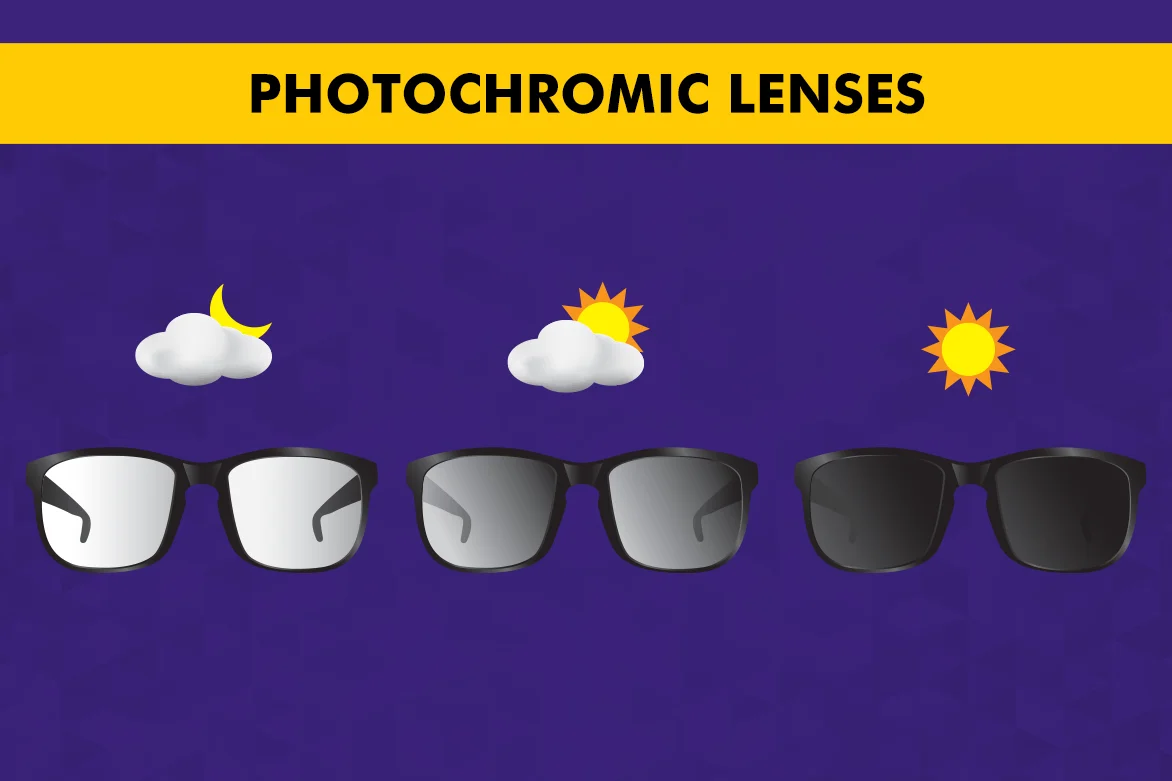
Photochromic lenses are lenses that darken when exposed to UV rays and revert to a clear state when UV exposure is reduced. They are designed to adapt to varying light conditions, making them ideal for individuals who frequently transition between indoor and outdoor environments. They help reduce eye strain caused by bright light and protect against harmful UV rays. Available in prescription glasses and sunglasses, they offer a versatile solution for users looking for both vision correction and sun protection.
How Photochromic Lenses Work?
Photochromic lenses – also called a photochromatic lens- darken under ultraviolet light and clear indoors. A chemical coating triggers this change: plastic lenses use organic molecules like oxazines and naphthopyrans, while older glass ones rely on silver halide crystals. Highly responsive to UV, these lenses adapt automatically, ensuring a smooth transition between indoor and outdoor light. They effectively reduce eye strain and glare in sunlight, provide built-in UV protection through tinting, and offer the convenience of a single eyewear pair serving as both prescription glasses and sunglasses.
Clarifying the Term: Photochromatic Lenses
The terms “photochromatic” and “photochromic” are often used interchangeably; however, “photochromic” is the industry-standard term for lenses that change tint based on UV light exposure. Both terms refer to lenses that darken in response to sunlight and revert to a clear state indoors. While “photochromatic” is also valid, it is less commonly used in practice.
What Are Transition Lenses?
Transition lenses are a brand of photochromic lenses produced by Transitions Optical. These lenses function just like other photochromic lenses. However, they’re known for their rapid response times and are available as coloured transition lenses like grey, brown, and even more vibrant options. And there are also different types of transition lenses, catering to various preferences and needs, such as those designed specifically for prescription glasses or sunglasses. This variety allows users to choose what best suits their style while enjoying the benefits of adaptive eyewear.
Transition Lenses are widely trusted for their consistent performance and adaptability, making them one of the most popular choices in photochromic eyewear. While making a purchase, do consider the cost of transition lenses, which may be higher than standard lenses due to their advanced technology and functionality.
Other Names for Photochromic Lenses
Photochromic lenses are often referred to by various names, each emphasising their adaptive properties. Common terms include:
- Adaptive Lenses
- Light-Adaptive Lenses
- Variable Tint Lenses
- Transition Glasses
So, the next time you hear any of these terms, don’t be confused and know they’re referring to photochromic lenses.
Types & Colors: Navigating Your Options
You’ll find various options such as:
- Standard photochromic lenses for prescription glasses (every-day wear)
- Photochromic lenses sunglasses or photochromic lenses goggles designed for outdoor activities
- Lens colours and tints: many manufacturers offer grey, brown and other colour variants.
If you’re comparing photochromic lenses vs polarized lenses: polarized lenses specifically reduce glare by filtering horizontal light waves, while photochromic lenses dynamically change tint in response to UV light. One isn’t strictly better than the other — the best photochromic lenses may even incorporate polarization for enhanced glare control.
How Temperature Affects Photochromic Lenses?
Temperature plays a role in how fast or dark the lenses change. In cooler environments, photochromic lenses tend to darken more intensely and take longer to clear. In contrast, in hotter climates, they may appear slightly lighter since the heat accelerates the molecules returning to their transparent state.
Do Photochromic Lenses Wear Out?
While these lenses are designed for durability, consistent wear can ultimately compromise their effectiveness. Over time, the molecular structure of these lenses may degrade, leading to diminished responsiveness in their ability to transition. This typically happens after using the lenses regularly for many years. To ensure optimal visual performance and protection, it is advisable to replace them approximately every two to three years, depending on usage and environmental factors.
Pricing in India: What to Expect
When considering photochromic lenses price in India:
- Entry-level photochromic lenses (frames + lenses) can be available for under ₹1,500 in casual eyewear brands.
- More advanced branded lenses (prescription with high-index materials, anti-glare or premium coatings) tend to cost significantly more.
While “photochromic lenses price in India” starts at budget levels, actual cost depends on brand, lens material, coatings like anti glare photochromic lenses, and additional features such as polarization.
FAQs
Is a photochromic lens good for eyes?
Yes, photochromic lenses protect eyes from harmful UV rays and reduce light-induced strain.
What is better, polarized or photochromic lenses?
Polarized lenses reduce glare better, while photochromic lenses adapt to changing light conditions.
How much do photochromic lenses cost?
Photochromic lenses price in India ranges between ₹1,500 to ₹10,000, depending on features.
Do photochromic lenses reduce glare?
Yes, they minimize glare and brightness, offering comfortable vision in sunlight or bright environments.
What is the difference between photochromic and transition lenses?
Transition is a brand of photochromic lenses; both darken under UV light exposure.
Do photochromic lenses wear as sunglasses?
Yes, photochromic lenses function as sunglasses outdoors by darkening in sunlight automatically.
How long do photochromic lenses last?
They typically last two to three years before the tinting performance starts decreasing.